
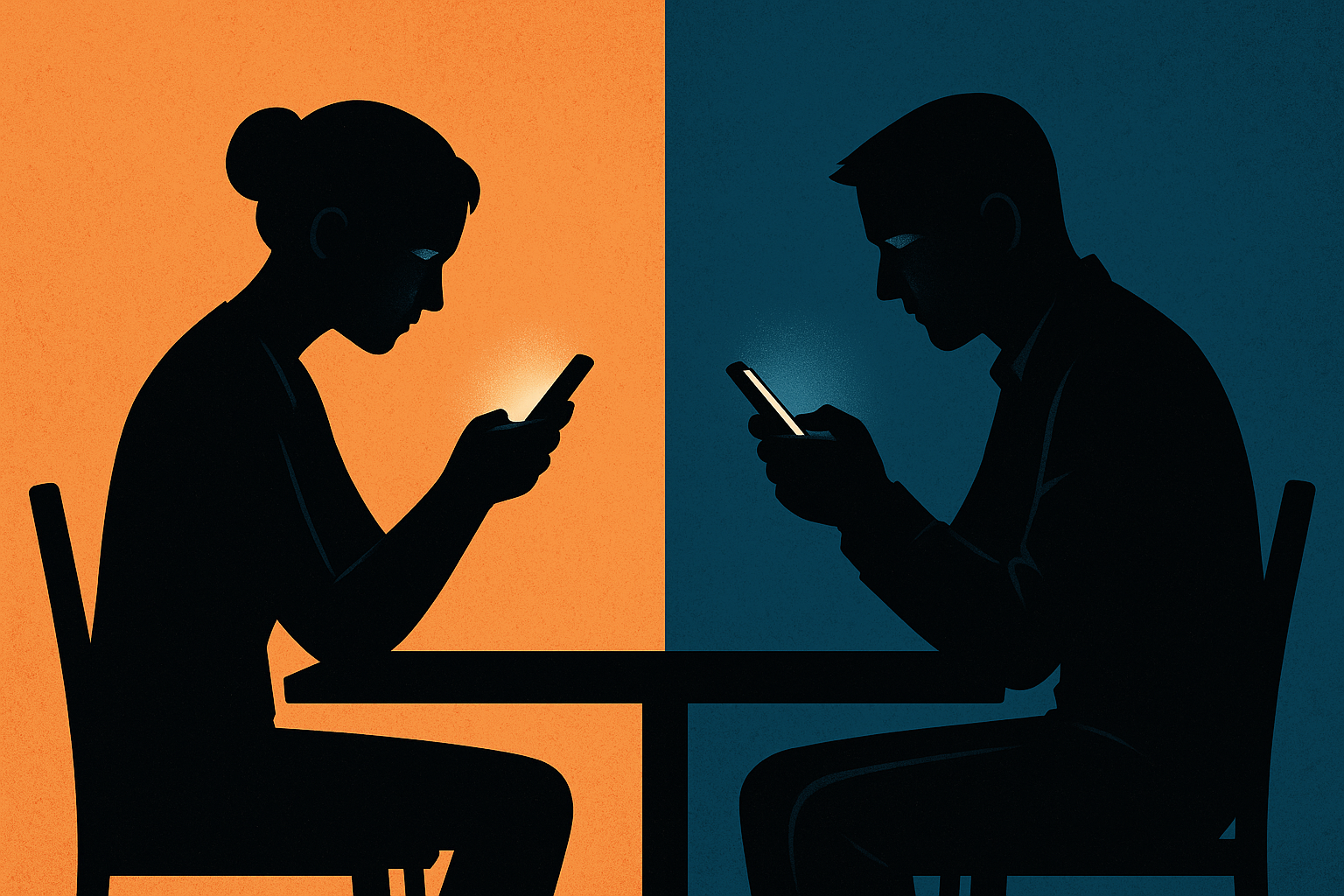
It used to be that difficult conversations happened face-to-face, across the kitchen table, or maybe over the phone when distance got in the way. We could hear the tremble in someone’s voice, see the expression in their eyes, catch the pauses that revealed what words couldn’t. Tone and body language carried as much weight as the message itself.
Today, more and more of our communication happens in short bursts: a text, a comment, a quick post blasted out to an audience that may or may not understand what we’re really saying. Convenience is king. But with it comes something else—heightened sensitivity.
Lost in Translation
Texts and social media posts strip away the human cues that help us interpret meaning. A sarcastic remark in person can be softened with a smile or playful tone. In a text, the same words can come across as biting or cruel. A quick “k” might be shorthand for “okay” to one person, but to the recipient, it feels like a cold dismissal.
How many arguments now start because someone misread a message? How many friendships fray not because of what was said, but because of how it was perceived? Without the sound of a voice or the look in an eye, the reader is left to fill in the blanks with their own assumptions—and usually, those assumptions lean negative.
The Megaphone Effect
Social media has taken this even further. Platforms designed for connection have become arenas for grievance. Instead of calling a friend to work through a disagreement, we post about it. Instead of speaking to someone directly about a concern, we subtweet or craft a vague status that airs the frustration for the whole world to see.
It’s not just that the point of view can get lost—it’s that the very act of going public often escalates the situation. What could have been a quiet conversation becomes a spectacle. People pile on, interpretations multiply, and suddenly a small misunderstanding is amplified to the size of a full-blown controversy.
The Rise of Hyper-Sensitivity
Because communication has grown so impersonal, our sensitivity has heightened. We read between the lines, searching for intent that may not exist. We overanalyze word choice, punctuation, and response times. Did they use a period because they’re mad? Why didn’t they reply with an emoji? Why did they leave me on “read”?
This constant decoding is exhausting. It keeps us on edge, quick to assume offense, quicker to respond in kind. In the end, we’re left feeling more fragile, less trusting, and more disconnected than ever—ironically, in an era when we are supposedly more “connected” than any generation in history.
The Human Cost
At the heart of all this is a simple truth: relationships are built on nuance. Trust, empathy, and understanding require more than just words on a screen. They require presence. And presence is something our devices can’t fully replicate.
Think about the last time you really talked to someone—face-to-face, with no notifications buzzing in the background. Chances are, you walked away feeling lighter, closer, and more understood. Now compare that to the last text exchange that spiraled into frustration or the social media thread that left you more upset than when you started. The difference is night and day.
A Way Back
So where do we go from here? I don’t think it means abandoning technology or pretending we can live without texts and posts. They’re here to stay, and they do serve a purpose. But maybe we can be more intentional.
- Pick up the phone. If the topic matters, don’t leave it to guesswork. Call.
- Save sensitive conversations for in-person. Tone and body language matter more than we realize.
- Think before you post. Ask yourself: Is this something better said directly to the person?
- Give grace. Not every message has hidden meaning. Sometimes “k” just means “okay.”
Technology has given us incredible tools, but it’s also created new challenges. The key is to remember that behind every screen is a human being who still craves connection, nuance, and understanding.
Maybe the cure for heightened sensitivity isn’t tougher skin—it’s softer hearts, willing to step away from the keyboard and back into honest conversations.
MM

 Motorbike Mike
Wise information. Needed now more than ever.